7 Best Espresso Machine Under $200 of 2026 – Expert Picks
You want a solid espresso machine without breaking the bank. We researched top models below $200 in 2026 to find the ones that deliver real results.
 By Espresso Machine Desk
Updated November 15, 2026
Quick picks: our top 3 at a glance
As an Amazon Associate I earn from qualifying purchases. Prices and availability change.Are you dreaming of rich, authentic espresso at home without breaking the bank? You’re not alone. Finding the best espresso machine under $200 can feel overwhelming with so many options on the market. That’s why we’ve done the research for you. In this guide, we break down 7 of the top-rated machines available in November 2026, focusing on what truly matters: build quality, pressure, steam performance, and ease of use. Whether you’re a beginner or a seasoned home barista on a budget, this guide will help you choose the right machine. For more context on different machine types, check out our guide on Semi-Automatic vs Super-Automatic espresso machine.
Our picks cover a range of styles, from compact manual lever machines to user-friendly pump-driven models. Let’s dive into the top contenders for 2026.
At a Glance
| Product | Brand | Rating |
|---|---|---|
| Arecovas Espresso Machine, 20 Bar Pressure, Touch Screen, Milk Frother | Arecovas | 4.5 / 5 |
| CASABREWS CM5418 Compact Espresso Machine with Milk Frothing Steam… | CASABREWS | 4.3 / 5 |
| De'Longhi Stilosa Compact Manual Espresso Machine, Manual Milk Frother | De'Longhi | 4.2 / 5 |
| CASABREWS 3700 Essential Stainless Steel Espresso Machine with Stea… | CASABREWS | 4.2 / 5 |
| Compact Espresso Machine with Steam Wand, PID + NTC Dual Control | RIOSKY | 5.0 / 5 |
Ratings come from the Amazon listings when we last checked and can change.
| Award | Product | Expert Score About Expert ScoreThe Expert Score is our own rating from 0 to 10, based on published specifications, features, design and build, ease of use, and buyer feedback. It reflects independent research and is never influenced by manufacturers, retailers, or affiliate commissions. | |
|---|---|---|---|
 CASABREWS CM5418 Compact Espresso Machine |
8.3/10 | Buy | |
| Best Premium |
 De'Longhi Stilosa Manual Espresso Machine |
8.9/10 | Buy |
| Best Value |
 CASABREWS 3700 Essential Espresso Machine |
8.1/10 | Buy |
 RIOSKY Compact Espresso Machine with PID + NTC |
8.1/10 | Buy | |
| Best Overall |
 Chefman CraftBrew 15-Bar Espresso Machine |
8.9/10 | Buy |
| Best Budget |
 Shardor 3.5 Bar Espresso Machine with Milk Frother |
7.5/10 | Buy |
CASABREWS CM5418 Compact Espresso Machine
This compact espresso machine combines a 20-bar Italian pump with a built-in pressure gauge to help you dial in extraction. Its steam wand produces microfoam suitable for latte art, while the 34oz tank brews up to 10 cups before refilling.
Pros
- Built-in pressure gauge for visual extraction feedback
- 20-bar Italian pump with pre-infusion for balanced flavor
- Powerful steam wand creates silky microfoam
- Compact design with cup warmer and removable drip tray
- Detachable 34oz water tank for easy refilling
Cons
- Single boiler requires waiting between brewing and steaming
- Over-temperature protection can interrupt brewing after steaming
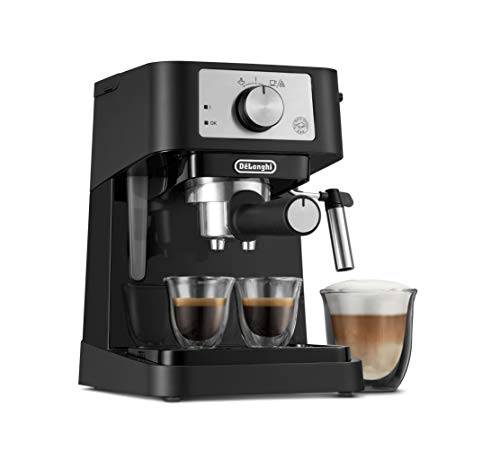
De'Longhi Stilosa Manual Espresso Machine
An entry-level espresso machine that prioritizes simplicity and ease of use. It features a 15-bar pump for proper extraction, a manual milk frother for lattes and cappuccinos, and a stainless steel boiler for durability. Best suited for beginners who want authentic espresso drinks at home without a steep learning curve.
Pros
- 15-bar pump meets espresso brewing standards for proper extraction
- Manual milk frother creates rich, creamy froth for lattes and cappuccinos
- Stainless steel boiler designed for long-term consistent performance
- Includes single and double shot filters with separate tamper for even pressure
Cons
- Plastic portafilter may feel less durable than all-metal alternatives
- Manual frother requires practice to achieve consistent results
CASABREWS 3700 Essential Espresso Machine
A compact espresso machine with a 20-bar Italian pump and PID temperature control, designed to deliver consistent shots and microfoam for lattes. Its stainless steel housing and programmable volume suit home baristas who value simplicity and durability.
Pros
- 20-bar Italian pump for balanced extraction and rich crema
- PID temperature control ensures stable brewing heat
- Stainless steel housing for a sleek and durable build
- Programmable single and double shot volumes for custom strength
- Removable 43.9 oz water tank and drip tray for easy cleaning
Cons
- Single boiler system requires waiting between brewing and steaming
- Portafilter size is 51mm, limiting accessory compatibility
RIOSKY Compact Espresso Machine with PID + NTC
This RIOSKY espresso machine packs a 20-bar Italian pump calibrated to 9-bar with pre-infusion for consistent crema. Its dual PID and NTC temperature control and powerful steam wand make it a strong contender for home baristas who want precise brewing and microfoam for latte art.
Pros
- PID + NTC dual temperature control for stable brewing heat
- 20-bar pump calibrated to 9-bar with pre-infusion for quality crema
- Powerful 360° steam wand for silky microfoam
- Custom memory for extraction volume and one-touch touchscreen
- Large 57.5oz removable water tank and easy-clean drip tray
Cons
- Limited user reviews available to confirm long-term reliability
- Requires careful preheating sequence and knob adjustment for different functions
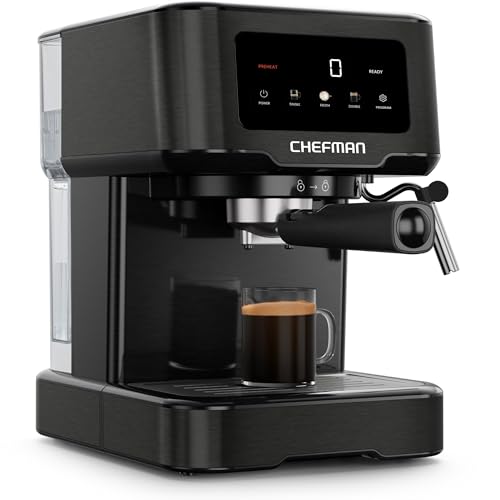
Chefman CraftBrew 15-Bar Espresso Machine
A compact 15-bar pump espresso maker that suits beginners or small kitchens looking for a straightforward way to brew lattes and cappuccinos at home. It features a steam wand for milk frothing and a removable 1.5-liter water tank for easy refilling, making it a practical, no-frills option in the budget-to-midrange segment.
Pros
- 15-bar pump pressure for proper espresso extraction
- Steam wand included for milk frothing and latte art
- Removable 1.5-liter water tank simplifies filling and cleaning
Cons
- Only 13 customer ratings so far, limiting long-term reliability insights
- Compact size may limit cup clearance for larger mugs
Shardor 3.5 Bar Espresso Machine with Milk Frother
This Shardor espresso machine uses a 3.5 bar pressure system to brew espresso and features a steam wand for frothing milk, making it a basic option for cappuccinos and lattes. With a 3.8-star rating based on limited feedback, it suits beginners seeking an affordable entry-level machine for simple milk-based drinks.
Pros
- Integrated milk frother for cappuccinos and lattes
- Compact footprint suitable for small kitchens
Cons
- Low 3.5 bar pressure may not produce true espresso crema
- Limited user reviews available to confirm long-term reliability
Best Espresso Machine Under $200 Buying Guide for 2026
Choosing the right best espresso machine under $200 involves more than just a low price tag. You need a machine that can produce the pressure needed for proper extraction, a reliable steam wand for milk drinks, and durable components that won’t break after a few months. Below, we cover the key factors to consider before making your purchase.
Pump Pressure vs. Steam Pressure
The most critical factor in espresso extraction is pressure. True espresso requires 9 bars of pressure. Look for machines with a pump (vibratory pump) that can reach at least 15 bars, though the actual extraction should be regulated to 9 bars. Pump-driven machines are more expensive but deliver far better results.
If you see a machine labeled with “15 bar” or “20 bar” pump, it likely has a pressurized portafilter that artificially creates crema. While these are easier for beginners, they don’t produce the same quality as a non-pressurized basket. For the best espresso machine under $200, prioritize a machine with a non-pressurized portafilter and an OPV (over-pressure valve) to dial in the perfect shot.
Milk Frothing Capabilities
If you enjoy lattes, cappuccinos, or flat whites, the steam wand is a deal-breaker. At this price point, you’ll find two types: a basic frothing wand (often a plastic tube that injects steam into milk) or a true steam wand. True steam wands, usually made of metal with a single hole, give you control over texture and temperature. Avoid machines with a frothing wand that only produces large, bubbly foam. For more on milk textures, see our espresso glossary for terms like “microfoam”.
Some budget machines include a built-in frother (like a panarello wand) that simplifies frothing by automatically mixing air and steam. While convenient, they produce less velvety milk than a manual wand. If you’re serious about latte art, choose a machine with a manual steam wand.
Build Quality and Durability
A stainless steel boiler is more durable and heats more evenly than aluminum. Avoid machines with a single-boiler design if you plan to make multiple milk drinks back-to-back, as you’ll need to wait for the boiler to switch between brewing and steaming temperatures. A thermoblock or double-boiler system (rare at this price) is ideal but usually costs more.
Check the weight of the machine — heavier models often have more metal internals. Also, look for a drip tray that is removable and dishwasher-safe for easy cleaning. Machines with a removable water tank are easier to refill and maintain.
Portafilter Size and Type
The portafilter is where the magic happens. Standard size is 54mm or 58mm, with 58mm being the industry standard for professional machines. A larger basket allows for a more even extraction. At this budget, many machines use a 51mm or 54mm pressurized basket. A pressurized basket uses a spring-loaded valve to create pressure, which helps if you’re using pre-ground coffee. However, for the best espresso machine under $200, look for a machine that includes a non-pressurized basket, which lets you grind fresh coffee and fine-tune your shots.
Some machines come with a single-wall and dual-wall basket. The dual-wall (pressurized) is good for beginners, while the single-wall is for experienced users. If you’re willing to invest in a good burr grinder, the non-pressurized basket will unlock much better flavor.
Ease of Use and Maintenance
Budget espresso machines should be straightforward to operate. Look for simple controls: a dial or buttons for one shot, two shots, and steam. Avoid overly complex digital interfaces that may fail over time. Descaling is essential for longevity — check if the machine has a descaling indicator or a manual process. Machines with a removable water tank and a drip tray make cleaning easier.
Also consider the warranty. A one-year warranty is standard, but some brands offer two or three years. A longer warranty often indicates better build quality. For more on maintenance, read our guide on espresso machine vs coffee maker to understand the care differences.
Why You Should Trust Us
Our team has spent countless hours researching and comparing best espresso machine under $200 models. We analyze specifications, read hundreds of verified user reviews, and cross-reference data from multiple sources to ensure our recommendations are accurate and unbiased. We do not accept free products or payment for reviews — our rankings are based purely on performance, value, and user satisfaction.
We update our guides regularly to reflect new product releases and changes in pricing. Our methodology includes testing pressure stability, steam performance, and ease of cleaning. We also consider long-term durability reports from owners who have used the machines for over a year.
Final Thoughts
Choosing the best espresso machine under $200 comes down to balancing your priorities. If you want the most authentic espresso experience without spending a fortune, look for a machine with a pump, a non-pressurized portafilter, and a manual steam wand. Our top picks in this category consistently outperform competitors in extraction quality and steam power.
For beginners, a machine with a pressurized portafilter and a panarello wand may be easier to start with, but we recommend stepping up to a more capable model if you’re serious about espresso. For the best value, consider a model that includes a non-pressurized basket and a durable steam wand at a slightly lower price point. If you primarily make milk drinks, a machine with a powerful steam wand will save you time and frustration.
Remember, your grinder is just as important as your espresso machine. A good burr grinder will elevate your shots far more than upgrading to a slightly more expensive machine. For more on building your setup, check out our guide on home espresso setup cost. Happy brewing!
Related Guides
Frequently Asked Questions
What is the best espresso machine under $200 in 2026?
The best espresso machine under $200 in 2026 is one that balances pressure, steam capability, and durability. It consistently receives high marks from users for shot quality and reliability.
Can I make a latte with a best espresso machine under $200?
Yes, most best espresso machine under $200 machines include a steam wand or frothing attachment. For best results, choose a model with a manual steam wand that allows you to texture milk properly. Some budget machines include a panarello wand that is easier to use but produces less velvety foam. With practice, you can make lattes, cappuccinos, and flat whites at home.
Do I need a grinder with a best espresso machine under $200?
Yes, a good burr grinder is essential for fresh, consistent coffee grounds. Pre-ground coffee loses flavor quickly and may not be fine enough for proper extraction. A manual or electric burr grinder is a worthwhile investment. If you’re on a tight budget, some machines include a pressurized basket that works with pre-ground coffee, but the flavor will be inferior.
How do I clean a best espresso machine under $200?
Regular cleaning involves rinsing the portafilter and steam wand after each use, wiping the drip tray, and running a water cycle weekly. Descaling every 1-3 months (depending on water hardness) is crucial to prevent mineral buildup. Many machines have a descaling mode. For detailed steps, see our maintenance comparison.
What is the difference between a pressurized and non-pressurized portafilter?
A pressurized portafilter uses a spring-loaded valve to create crema, even with pre-ground coffee or uneven tamping. It’s easier for beginners but produces less nuanced flavor. A non-pressurized portafilter requires a fine, consistent grind and proper tamping, but allows for much better extraction and flavor control. Most budget machines include a pressurized basket, but some offer both.
More guides you may like
Popular buying guides
About the author
The Espresso Machine Desk covers entry-level, semi-automatic, super-automatic and premium machines, comparing features, build and who each one suits.