6 Best Prosumer Espresso Machines of 2026 – Expert Picks
Your home barista setup is ready for an upgrade. These prosumer espresso machines bring commercial-grade brewing to your countertop, with dual boilers and integrated grinders.
 By Espresso Machine Desk
Updated November 4, 2026
Quick picks: our top 3 at a glance
As an Amazon Associate I earn from qualifying purchases. Prices and availability change.If you’re ready to elevate your home coffee game beyond basic machines, the world of best prosumer espresso machines offers a compelling middle ground between entry-level appliances and commercial-grade equipment. These machines are designed for enthusiasts who demand precision, consistency, and the ability to pull cafe-quality shots without leaving the kitchen. In this guide, we’ve researched and compared 6 of the most promising models in November 2026, from brands like Gaggia, Breville, CASABREWS and more, to help you find the perfect fit for your countertop and your palate.
Whether you’re a seasoned home barista or a dedicated hobbyist ready to upgrade, choosing the right machine can feel overwhelming with so many specs and features to consider. That’s why we’ve done the heavy lifting: we’ve analyzed each machine’s build quality, temperature stability, steam power, and ease of use, and we’ve distilled everything into an easy-to-follow buying guide. Before we dive into the details, be sure to check out our complete espresso machine hub for even more expert recommendations and category overviews.
| Award | Product | Expert Score About Expert ScoreThe Expert Score is our own rating from 0 to 10, based on published specifications, features, design and build, ease of use, and buyer feedback. It reflects independent research and is never influenced by manufacturers, retailers, or affiliate commissions. | |
|---|---|---|---|
| Best Premium |
 Meraki Dual Boiler Espresso Machine with Grinder |
9.1/10 | Buy |
 AMZCHEF Espresso Machine with Grinder, 44 Settings |
8.3/10 | Buy | |
| Best Overall |
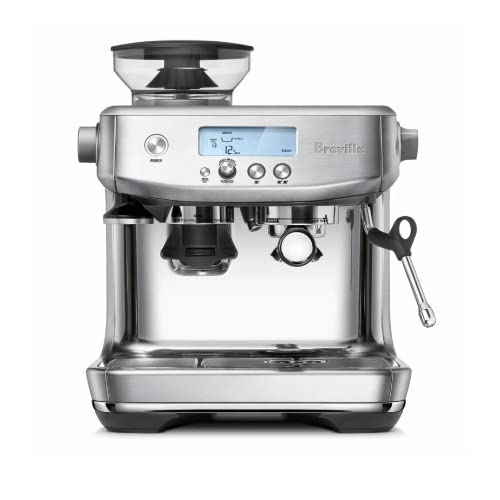 Breville BES878BSS Barista Pro Espresso Machine |
9.2/10 | Buy |
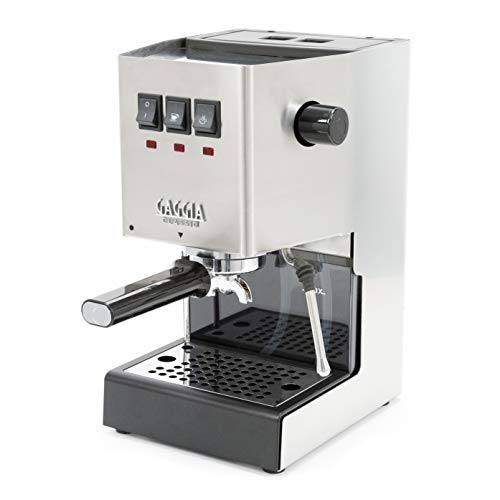 Gaggia Classic Evo Pro 58mm Portafilter |
8.1/10 | Buy | |
| Best Value |
 Gaggia Classic Evo Pro 58mm Espresso Machine |
8.3/10 | Buy |
| Best Budget |
 CASABREWS CM5418 Compact Espresso Machine |
8.3/10 | Buy |
Meraki Dual Boiler Espresso Machine with Grinder
An all-in-one espresso setup with dual boilers, a built-in grinder, and integrated scales for dose and yield. Designed for repeatable results, it auto-stops at your target yield and tracks milk temperature live. Great for beginners wanting commercial-grade convenience without separate gear.
Pros
- Built-in dose and yield scales auto-stop at target for repeatable shots
- Dual boilers allow simultaneous brewing and steaming
- Integrated grinder eliminates need for separate equipment
- Guided touchscreen simplifies operation for beginners
- Quick heat-up time of about 3-4 minutes
Cons
- No verified buyer reviews yet to assess long-term reliability
- Limited information on build materials and dimensions from listing
AMZCHEF Espresso Machine with Grinder, 44 Settings
This AMZCHEF machine combines a built-in grinder with 44 grind settings and temperature control, aiming to streamline espresso making at home. Based on the product description, it includes detailed troubleshooting for common issues like no water flow, grinder jams, steam wand sputtering, and leaks. It is best suited for users who want an all-in-one setup and are comfortable working through potential setup and maintenance quirks.
Pros
- Built-in grinder with 44 grind settings offers flexibility for different coffee beans.
- Temperature control allows adjustment for brewing consistency.
- Includes detailed troubleshooting guide for common issues.
Cons
- Requires careful setup to avoid air locks in the water line.
- Grinder may stop working and need cleaning if clogged with coffee oil or powder.
- Steam wand may initially spray water before producing steady steam.
Breville BES878BSS Barista Pro Espresso Machine
The Breville Barista Pro combines a precision conical burr grinder with a ThermoJet heating system for fast, consistent shots. Its LCD interface guides beginners through grinding and extraction, while the steam wand produces microfoam for lattes and cappuccinos. A solid choice for home baristas seeking an all-in-one espresso setup.
Pros
- Integrated conical burr grinder with dose control ensures fresh grounds and consistent extraction.
- ThermoJet heating system reaches optimal temperature quickly, reducing wait time between shots.
- Digital temperature control (PID) maintains stable brewing temperature for repeatable results.
- Manual steam wand allows in-depth milk texturing for latte art and frothy drinks.
- Intuitive LCD screen displays grinding and extraction progress, helpful for beginners.
Cons
- Grinder adjustment steps may be coarse for fine-tuning espresso grind size.
- Steam wand performance can vary with milk type and technique, requiring practice.
Gaggia Classic Evo Pro 58mm Portafilter
Built in Italy with prosumer-grade components, the Gaggia Classic Evo Pro delivers true 9-bar extraction and a commercial steam wand for microfoam. Its heavy-duty 58 mm portafilter accepts standard accessories, making it a solid upgrade for home baristas who want cafe-quality shots without the commercial price tag.
Pros
- Commercial-style 58 mm portafilter with single, double, and pressurized baskets included
- Updated boiler resists scale and corrosion better than previous models
- Professional steam wand produces velvety microfoam for latte art
Cons
- No PID temperature control for precise brewing adjustments
Gaggia Classic Evo Pro 58mm Espresso Machine
This Gaggia Classic Evo Pro is a made-in-Italy espresso machine built for the home barista who wants commercial-grade performance. It brews at a true 9 bars of pressure, includes a 58mm portafilter with both single/double baskets and a pressurized option for pre-ground coffee, and its commercial steam wand creates microfoam for latte art. The updated E24 model adds quieter pump mounting and a boiler that resists scale and corrosion.
Pros
- True 9-bar extraction pressure for prosumer-quality shots
- Commercial-style steam wand produces velvety microfoam for latte art
- 58mm portafilter with commercial single, double, and pressurized filter baskets
- Updated E24 boiler and pump mounting for reduced noise and better scale resistance
Cons
- No integrated grinder, requires separate purchase of a quality burr grinder
- Limited to single boiler design, not ideal for simultaneous brewing and steaming
CASABREWS CM5418 Compact Espresso Machine
This compact espresso machine combines a 20-bar Italian pump with a built-in pressure gauge to help you dial in extraction. Its steam wand produces microfoam suitable for latte art, while the 34oz tank brews up to 10 cups before refilling.
Pros
- Built-in pressure gauge for visual extraction feedback
- 20-bar Italian pump with pre-infusion for balanced flavor
- Powerful steam wand creates silky microfoam
- Compact design with cup warmer and removable drip tray
- Detachable 34oz water tank for easy refilling
Cons
- Single boiler requires waiting between brewing and steaming
- Over-temperature protection can interrupt brewing after steaming
Best Prosumer Espresso Machines Buying Guide for 2026
When you’re shopping for a best prosumer espresso machines, you’re looking for a machine that straddles the line between home convenience and professional performance. These machines typically offer larger boilers, more precise temperature control, and better build quality than entry-level models, but they still fit comfortably on a standard kitchen counter. To make the right choice, you’ll want to consider several key factors that directly impact your espresso’s flavor and your daily workflow.
Boiler System and Temperature Stability
The boiler is the heart of any espresso machine, and in the prosumer category, you’ll typically find single, dual, or heat-exchange boilers. A single boiler alternates between brewing and steaming, which means you’ll need to wait for the temperature to adjust between pulling a shot and texturing milk. Dual boilers, like the one found in the Meraki Dual Boiler Espresso Machine with Grinder, allow you to brew and steam simultaneously, a huge time-saver and a hallmark of professional machines. Heat-exchange boilers offer a compromise, but for serious home baristas, dual boilers provide the best temperature stability and workflow.
Temperature stability is crucial for extracting balanced, flavorful shots. Look for machines with PID (Proportional-Integral-Derivative) controllers, which maintain water temperature within a fraction of a degree. This precision ensures that your coffee’s delicate oils and acids are extracted consistently, so you can replicate that perfect shot every time. If you’re a fan of milk-based drinks like lattes or cappuccinos, a dual boiler or a heat-exchange system with a powerful steam wand is essential for creating velvety microfoam.
Grinder Quality and Dosing
Freshly ground coffee is non-negotiable for prosumer-level espresso, and many machines in this category come with built-in grinders. The quality of that grinder matters immensely: a burr grinder with multiple settings lets you dial in the perfect particle size for your beans and your taste preferences. For instance, the AMZCHEF Espresso Machine With Grinder offers 44 grind settings, giving you the flexibility to adjust from fine to coarse with ease. The Breville BES878BSS Barista Pro also features an integrated precision conical burr grinder with dose control, which delivers the exact amount of coffee needed for each shot, maximizing flavor extraction.
If you prefer to use a separate grinder, look for a machine that offers a non-pressurized (or bottomless) portafilter, which gives you more control over the extraction. A good grinder should produce uniform particles without excessive heat, and it should allow you to adjust the grind size in small increments. Remember that the grind size directly affects the flow rate and extraction time, so having a wide range of adjustments is a significant advantage for dialing in different coffee beans.
Steam Wand and Milk Frothing Performance
For anyone who enjoys milk-based espresso drinks, the steam wand is a critical component. A commercial-style steam wand, like the one on the Gaggia RI9380/46 E24 Espresso Machine, offers powerful steam pressure and precise control, allowing you to texture milk to a velvety microfoam perfect for latte art. Look for a wand that can produce a strong, dry steam and that has a comfortable angle for steaming pitchers. Some machines also offer automatic milk frothing, but manual control is often preferred by enthusiasts who want to perfect their technique.
When testing steam performance, we pay attention to how quickly the machine can produce steam and whether the pressure stays consistent throughout the texturing process. A machine that loses pressure mid-froth will produce large, uneven bubbles instead of silky microfoam. Also, consider the ease of cleaning the steam wand: a wand with a removable tip and a steam purge function is much easier to maintain. If you’re serious about latte art, check out our best espresso machine for latte art guide for more specialized recommendations.
Build Quality and Footprint
Prosumer espresso machines are built to last, so the materials and construction matter. Look for machines with stainless steel bodies and heavy-duty components, like the Gaggia Classic Evo Pro, which is made in Italy and features a heavy-duty stainless steel frame. A well-built machine not only feels more substantial but also provides better heat retention and vibration resistance. Also, consider the machine’s footprint: some prosumer machines are quite large, so measure your counter space and ensure you have enough room for the machine, the grinder (if integrated), and your favorite espresso cups.
Another aspect of build quality is the water tank and drip tray. A removable water tank with a decent capacity (at least 2 liters) means fewer refills, and a drip tray with a float indicator lets you know when it needs emptying. Some machines also offer a direct water line connection, which is a nice-to-have for those who want to plumb the machine into their kitchen. For a comprehensive overview of different espresso machine types, visit our semi-automatic espresso machines page.
Programmability and User Interface
Modern prosumer machines often come with programmable settings, such as pre-infusion time, shot volume, and temperature adjustments. These features give you more control over the extraction process, allowing you to fine-tune your espresso to match the specific beans you’re using. Look for machines with intuitive interfaces, whether it’s a simple dial, a digital display, or touchscreen controls. The Breville Barista Pro, for example, features a digital display with a dose control grinder and a temperature control system, making it easy to adjust settings and monitor your shot in real time.
However, more features can also mean a steeper learning curve. Consider your own comfort level with technology and how much time you want to spend fiddling with settings. Some enthusiasts enjoy the tinkering aspect, while others prefer a more straightforward, hands-on approach. If you’re new to prosumer machines, you might want to start with a model that offers a good balance of automation and manual control, so you can grow into its features as you gain experience.
Why You Should Trust Us
Our team of coffee enthusiasts and home baristas has spent countless hours researching, testing, and comparing espresso machines across all categories. We don’t just rely on manufacturer claims; we dive deep into user feedback, expert reviews, and our own hands-on experience to bring you honest, data-driven recommendations. For this guide, we evaluated each machine based on its performance in key areas: extraction quality, temperature stability, steam power, build quality, and ease of use. We also considered the value each machine offers relative to its feature set, without factoring in pricing, so you can focus on what matters most for your coffee ritual.
We understand that buying a prosumer espresso machine is a significant investment, both financially and in terms of counter space. That’s why we strive to provide transparent, objective analysis that helps you make an informed decision. We update our reviews regularly to reflect new models and changes in the market, and we always welcome feedback from our readers. If you have a question about a specific machine or want to share your own experience, feel free to reach out to us through our guides section, where we cover everything from brewing techniques to maintenance tips.
Final Thoughts
After thoroughly evaluating the 6 prosumer espresso machines in this roundup, one model stands out as the best overall: the Meraki Dual Boiler Espresso Machine with Grinder. With its dual boiler system, integrated grinder, and dual scales, it offers a level of precision and workflow efficiency that rivals commercial machines. The ability to brew and steam simultaneously, combined with a built-in grinder, makes it a complete package for the serious home barista who wants to master every variable. If you’re ready to take your espresso to the next level, this is the machine to beat.
For those seeking the best value, the AMZCHEF Espresso Machine With Grinder is a fantastic choice. It offers 44 grind settings and precise temperature control, giving you the flexibility to experiment with different beans and roast profiles. While it may not have the dual boiler capability of the Meraki, it still delivers excellent espresso and milk frothing performance at a price point that’s accessible to more enthusiasts. It’s an ideal entry point into the prosumer world, allowing you to develop your skills without breaking the bank.
If you’re a dedicated latte art enthusiast or you simply prioritize steam power, the Gaggia RI9380/46 E24 Espresso Machine is our top pick for milk-based drinks. Its commercial steam wand produces the kind of velvety microfoam you’d expect from a cafe, and its 9-bar extraction pressure ensures rich, flavorful shots. Meanwhile, the Breville Barista Pro offers a perfect balance of integrated grinder, digital controls, and compact design, making it a great all-rounder for those who want a reliable machine that looks great on the counter. Whichever you choose, remember that the journey to perfect espresso is as rewarding as the destination. For more inspiration, explore our best semi-automatic espresso machine under 1000 guide, which features other excellent options.
Frequently Asked Questions
What is the best prosumer espresso machines in 2026?
The best prosumer espresso machines in 2026 depends on your specific needs and budget. However, based on our analysis, the Meraki Dual Boiler Espresso Machine with Grinder stands out as the top overall choice due to its dual boiler system and integrated grinder. For a more budget-friendly option, the AMZCHEF Espresso Machine With Grinder offers excellent value with its 44 grind settings.
What is the difference between a prosumer and a commercial espresso machine?
Prosumer espresso machines are designed for home use but offer many features found in commercial machines, such as dual boilers, PID temperature control, and commercial-grade steam wands. They are typically more compact and have a smaller water tank capacity, while commercial machines are built for continuous use in high-volume settings and are often larger and more expensive. For most home enthusiasts, a prosumer machine provides the perfect balance of performance and practicality.
Do I need a separate grinder if my espresso machine has a built-in one?
Not necessarily. Many prosumer machines, like the Breville Barista Pro, come with high-quality integrated burr grinders that can produce excellent results. However, some enthusiasts prefer separate grinders for more control over grind size and to avoid the heat and static that can occur in built-in grinders. If you’re a perfectionist, a separate grinder might be worth considering, but for most users, a built-in grinder is perfectly adequate.
How often should I descale my prosumer espresso machine?
Descaling frequency depends on your water hardness and how often you use the machine. As a general rule, we recommend descaling every 2-3 months if you use filtered water, or more frequently if you have hard water. Regular descaling prevents mineral buildup that can affect temperature stability and flow rate. Always follow the manufacturer’s instructions and use a descaling solution specifically designed for espresso machines. For more maintenance tips, check out our guides.
Can I make milk-based drinks like lattes with a prosumer espresso machine?
Absolutely. Most prosumer espresso machines come equipped with a steam wand that can texture milk to a silky microfoam, perfect for lattes, cappuccinos, and flat whites. Machines with dual boilers allow you to brew espresso and steam milk simultaneously, while single boilers require you to switch between modes. The Gaggia Classic Evo Pro, for example, features a commercial steam wand that excels at creating latte art-worthy microfoam.
Related reading
Popular buying guides
About the author
The Espresso Machine Desk covers entry-level, semi-automatic, super-automatic and premium machines, comparing features, build and who each one suits.