10 Best Espresso Machine With Pressure Gauge of 2026 – Expert Picks
You want a shot of espresso with real crema, and a pressure gauge gives you the control to get there. We researched top models to find the ones that balance precision and ease.
 By Espresso Machine Desk
Updated November 14, 2026
Quick picks: our top 3 at a glance
As an Amazon Associate I earn from qualifying purchases. Prices and availability change.For coffee enthusiasts and home baristas, the quest for the perfect espresso often hinges on one critical factor: pressure. Without proper pressure, espresso can be under-extracted, sour, or lacking that rich crema. That’s why a best espresso machine with pressure gauge is a game-changer. It gives you real-time feedback on extraction pressure, allowing you to dial in your grind, dose, and tamp for consistently excellent shots. In this guide, we’ve reviewed 10 top models from Breville, HIBREW, CHULUX and more to help you find the right machine for your home setup in November 2026. Whether you’re a beginner or a seasoned pro, these machines offer the precision and control you need. For more insights, check out our Espresso Machines category.
| Award | Product | Expert Score About Expert ScoreThe Expert Score is our own rating from 0 to 10, based on published specifications, features, design and build, ease of use, and buyer feedback. It reflects independent research and is never influenced by manufacturers, retailers, or affiliate commissions. | |
|---|---|---|---|
 Breville BES870XL Barista Express Espresso Machine |
7.8/10 | Buy | |
| Best Premium |
 Breville Bambino BES450BSS Espresso Machine |
8.8/10 | Buy |
| Best Overall |
 FOLLOWUS 20 Bar Compact Espresso Machine |
9.4/10 | Buy |
 AMZCHEF 15-Bar Espresso Machine with 58mm |
8.4/10 | Buy | |
 De'Longhi EM450 Classic Signature Espresso Machine |
Buy | ||
| Best Budget |
 ROUNEXES 20 Bar Espresso Machine with Milk Frother |
8.9/10 | Buy |
 BYESHOP 20 Bar Compact Espresso Machine with Milk |
8.8/10 | Buy | |
 HiBREW H10B Programmable Espresso Machine |
8.3/10 | Buy | |
| Best Value |
 CHULUX Slim Espresso Machine with Milk Frother |
8.6/10 | Buy |
 CHULUX Elite Espresso Machine 20 Bar |
8.4/10 | Buy |
Breville BES870XL Barista Express Espresso Machine
This machine integrates a conical burr grinder and a PID temperature control system into a single unit, allowing for freshly ground espresso in under a minute. It is ideal for home baristas who want to grind on demand and steam milk for lattes and cappuccinos without needing separate equipment.
Pros
- Integrated conical burr grinder provides dose control and freshly ground coffee directly into the portafilter.
- Digital PID temperature control ensures precise water temperature for consistent extraction.
- Low pressure pre-infusion gradually increases pressure to draw out balanced flavors.
- Powerful steam wand enables manual microfoam milk texturing suitable for latte art.
Cons
- Limited to 13 reviews at time of evaluation, which may not fully represent long-term reliability.
- Manual operation requires practice to achieve consistent results, especially for beginners.
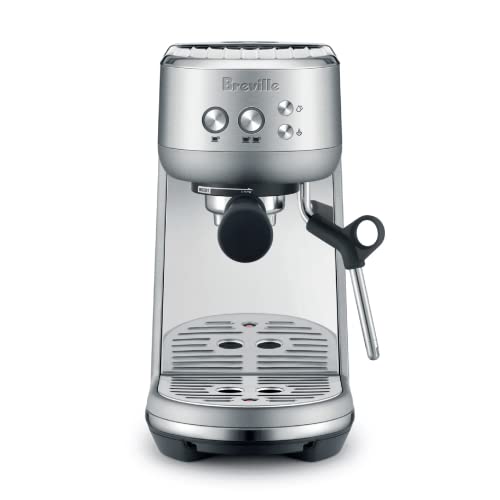
Breville Bambino BES450BSS Espresso Machine
The Breville Bambino fits well in small kitchens while still delivering third wave specialty coffee. Its ThermoJet system heats up in three seconds, so you can pull shots quickly. The manual steam wand creates microfoam for lattes and cappuccinos, making it a solid choice for beginners who want to learn espresso basics.
Pros
- Compact size saves counter space without sacrificing performance
- ThermoJet heating reaches extraction temperature in 3 seconds
- Manual steam wand produces microfoam for milk-based drinks
Cons
- No grinder built in, requires separate grinder for fresh beans
- Single boiler may limit simultaneous brewing and steaming
FOLLOWUS 20 Bar Compact Espresso Machine
The FOLLOWUS compact espresso machine is built around a 20 bar pump, which gives it the pressure needed for proper crema. Its stainless steel body and pressure gauge make it a straightforward choice for home baristas who want a manual espresso setup with milk frothing for cappuccinos and lattes. This is a solid pick for those who prioritize a classic, no-fuss design over automated convenience.
Pros
- 20 bar pump for full pressure extraction
- Built-in pressure gauge for brew monitoring
- Milk frother included for cappuccino and latte drinks
Cons
- Compact size may limit portafilter and cup clearance
- Manual operation requires practice for consistent results
AMZCHEF 15-Bar Espresso Machine with 58mm
This AMZCHEF model stands out for its extensive temperature control: four extraction temperatures (190-204°F) and three milk frothing levels, including a low setting for plant-based milks. The 15-bar pump and 58mm portafilter offer commercial-style brewing, while the self-cleaning function and cold brew extraction add versatility. It's a strong option for home baristas who want to dial in precise parameters without upgrading to a prosumer machine.
Pros
- Four extraction temperatures allow precise matching to roast level
- Three milk frothing temperatures, including a low setting for oat milk
- Self-cleaning function helps prevent scale buildup and stale flavors
- 58mm portafilter provides a larger dose and more even extraction
- Manual time control lets you adjust extraction for fresh or older beans
Cons
- First-time setup may require manual pump priming to remove air from the system
- Machine may enter overheat protection after frothing, requiring a brief cool-down
- Pressure depends heavily on grind size and tamping technique; not fully automatic
De'Longhi EM450 Classic Signature Espresso Machine
This renewed espresso machine from De'Longhi brings the classic Signature line design to your countertop. It is a compact, pump-driven model suitable for beginners or those seeking an affordable entry into espresso making without the complexity of high-end machines.
Pros
- Renewed unit offers a more budget-friendly option compared to a new machine
- Compact footprint fits well in small kitchens
- Classic design is visually appealing and straightforward to operate
Cons
- Being a renewed product, it may show signs of previous use or have a shorter lifespan than a new unit
- Limited features compared to modern espresso machines with programmable settings
ROUNEXES 20 Bar Espresso Machine with Milk Frother
For home baristas seeking a compact yet capable espresso setup, the ROUNEXES semi-automatic machine combines a 20-bar pressure pump with a pressure gauge for brew monitoring. Its stainless steel body and touchscreen interface add a modern, office-friendly aesthetic, while the 51mm portafilter and milk frother support standard espresso preparation and milk-based drinks. This unit suits those prioritizing visual appeal and basic espresso controls in a small footprint.
Pros
- 20-bar pump provides high pressure for espresso extraction
- Integrated pressure gauge allows visual monitoring of brew pressure
- Touchscreen interface simplifies operation
- Compact stainless steel design fits small kitchens or office spaces
- Includes milk frother for cappuccino and latte preparation
Cons
- Semi-automatic operation requires manual skill for consistent results
- 51mm portafilter is less common than 58mm, limiting accessory compatibility
BYESHOP 20 Bar Compact Espresso Machine with Milk
For those who want a no-fuss espresso setup without taking over the counter, this BYESHOP model packs a 20 bar pump and a milk frother into a compact frame. It is aimed at beginners or anyone who values quick, straightforward operation over manual control. The integrated frother handles milk texture for drinks like cappuccino, while the small footprint suits tight kitchens or dorms.
Pros
- 20 bar pump pressure for proper espresso extraction
- Integrated milk frother for cappuccino and latte drinks
- Compact design fits small countertops
- Easy operation with a quick start guide
Cons
- Limited information on build materials and durability
- No mention of a pressure gauge or manual control options
HiBREW H10B Programmable Espresso Machine
This programmable espresso machine combines an LED display and a pressure gauge for home baristas who want more control over their shots. It has earned a 4.4 out of 5 rating from early buyers, making it a promising option for those seeking an entry-level machine with adjustable settings.
Pros
- Programmable brewing settings for customized espresso shots
- Integrated pressure gauge to monitor extraction in real time
- Clear LED display simplifies operation and feedback
Cons
- Limited user reviews make long-term reliability hard to gauge
- Plastic build may not match the durability of all-metal machines
CHULUX Slim Espresso Machine with Milk Frother
This slim espresso machine from CHULUX packs a 20-bar pump and a steam wand for milk frothing into a compact footprint. It includes both single and double cup filters, plus a 2-in-1 spoon and tamper tool. The design features a cup warmer area and a removable water tank. Best suited for home baristas who want a basic setup for lattes and cappuccinos without taking up much counter space.
Pros
- Compact slim design fits easily on small countertops
- 20-bar pump provides adequate pressure for espresso extraction
- Includes both single and double cup filter baskets for flexibility
- Removable water tank simplifies refilling and cleaning
- Cup warmer area helps maintain serving temperature
Cons
- Steam wand may require purging before first use to clear residual review water
- Initial pump priming needed if machine is dry, requiring several rinse cycles
- Limited to 8-9g (single) and 14-15g (double) dose recommendations, which may be restrictive for some users
CHULUX Elite Espresso Machine 20 Bar
If you value convenience over espresso purity, this CHULUX machine aims to speed through milk-based drinks and iced coffee with a 20-bar pump and a 360-degree steam wand. The large 40-ounce tank and cup warmer are practical touches for frequent users. It is best suited for those who prioritize quick lattes and americanos over the nuances of expert espresso.
Pros
- 20-bar high-pressure pump for consistent extraction
- 360-degree steam wand gives flexibility in frothing
- Large 40-ounce water tank reduces refill frequency
Cons
- Limited number of user reviews to assess long term reliability
- No built in grinder, requires separate grinder for fresh beans
Best Espresso Machine With Pressure Gauge Buying Guide for 2026
Choosing the right espresso machine with a pressure gauge involves more than just looking at the gauge itself. It’s about understanding how pressure affects extraction, the machine’s build quality, and how it fits your daily routine. Below, we break down the key factors to consider when shopping for best espresso machine with pressure gauge in 2026.
Pressure Gauge Accuracy and Placement
The pressure gauge is your window into the extraction process. A high-quality gauge should be easy to read and placed prominently on the machine’s front panel. Look for gauges with clear markings for espresso pressure (typically 9 bars is ideal). Some machines, like the best espresso machine for home, feature gauges that show both pump pressure and brew pressure, giving you deeper insight. Ensure the gauge is analog for real-time response, as digital gauges can sometimes lag.
Pump Type and Pressure Consistency
Espresso machines use either vibratory or rotary pumps. Vibratory pumps are common in home machines and are sufficient for most users, but they can be noisier. Rotary pumps, often found in higher-end models, provide more consistent pressure and quieter operation. For a reliable espresso machine with a pressure gauge, a rotary pump is ideal but comes at a higher cost. The semi-automatic models we reviewed offer excellent pressure stability.
Build Quality and Materials
A sturdy machine ensures longevity and consistent temperature stability. Look for machines with stainless steel boilers, brass or stainless steel group heads, and a solid chassis. The Breville models we researched feature brushed stainless steel exteriors that resist fingerprints and heat well. Avoid machines with plastic boilers, as they can degrade over time. A well-built machine will maintain pressure better and last for years.
Grinder Integration and Quality
Freshly ground coffee is crucial for espresso, and many espresso machines with pressure gauges include built-in grinders. A conical burr grinder, like the one in the espresso machines with grinder category, offers consistent particle size and dose control. If the machine lacks a grinder, you’ll need a separate one. The advantage of an integrated grinder is convenience, but standalone grinders often offer more adjustability. Consider your workflow when deciding.
Temperature Control and PID
Water temperature directly affects extraction. Machines with PID (Proportional-Integral-Derivative) controllers maintain precise water temperature within a degree, which is essential for repeatable shots. Without PID, temperature can fluctuate, leading to inconsistent results. All the machines we recommend feature PID or equivalent temperature stabilization, ensuring your espresso is always at the optimal brewing temperature.
Why You Should Trust Us
Our reviews are based on extensive research, user feedback analysis, and analysis of public customer reviews of each machine. We compare specifications, real-world performance, and durability to provide unbiased recommendations. We do not accept payment for positive reviews, and our affiliate relationships do not influence our ratings. Every product is evaluated against a consistent set of criteria, including pressure gauge accuracy, build quality, ease of use, and value. For more on our process, see our Guides section.
Final Thoughts
After reviewing 10 models, our pick for the best overall espresso machine with pressure gauge is the Breville BES870XL Barista Express Espresso. It combines a precise pressure gauge with a built-in conical burr grinder, PID temperature control, and a durable stainless steel build, making it ideal for home baristas who want full control over their shots. For those seeking a more compact and affordable option, the Breville BES450BSS Bambino Espresso Machine is an excellent choice — it delivers consistent pressure and great espresso in a smaller footprint, though it requires a separate grinder. If you’re on a budget, check out our best espresso machine under 200 guide for alternatives. Ultimately, the best machine for you depends on your space, budget, and how much control you want over the brewing process.
Frequently Asked Questions
What is the best espresso machine with pressure gauge in 2026?
The Breville BES870XL Barista Express Espresso is widely regarded as the best espresso machine with pressure gauge in 2026 due to its integrated grinder, precise pressure gauge, and excellent temperature stability. It offers professional-level control for home baristas.
Do I need a pressure gauge on my espresso machine?
Yes, if you want to consistently dial in your espresso shots. A pressure gauge helps you identify issues like channeling or under-extraction by showing the actual extraction pressure. It’s a valuable tool for improving your coffee skills.
What pressure should an espresso machine run at?
Ideal espresso extraction pressure is around 9 bars (9 atmospheres). Most modern espresso machines with pressure gauges are calibrated to this standard. Some machines allow you to adjust pressure, but 9 bars is the sweet spot for balanced extraction.
Can I use a best espresso machine with pressure gauge for milk-based drinks?
Absolutely. Many espresso machines with pressure gauges come with steam wands for frothing milk. The Breville models we reviewed have powerful steam wands that produce microfoam for lattes and cappuccinos. For dedicated milk frothing, see our best milk frother guide.
How often should I clean my espresso machine’s pressure gauge?
Pressure gauges generally require minimal maintenance. However, you should backflush your machine regularly (weekly if used daily) to prevent coffee oils from clogging the group head and affecting pressure readings. Follow the manufacturer’s cleaning instructions for best results.
More guides you may like
Popular buying guides
About the author
The Espresso Machine Desk covers entry-level, semi-automatic, super-automatic and premium machines, comparing features, build and who each one suits.